

Composite Bonding in Gajularamaram
- 10+Years of experience
- 16,000+Patients treated
- 5.0Google rating
- 30–60 minutes per tooth
- usually one
- Mon – Sun: 9:30 AM – 9:30 PM
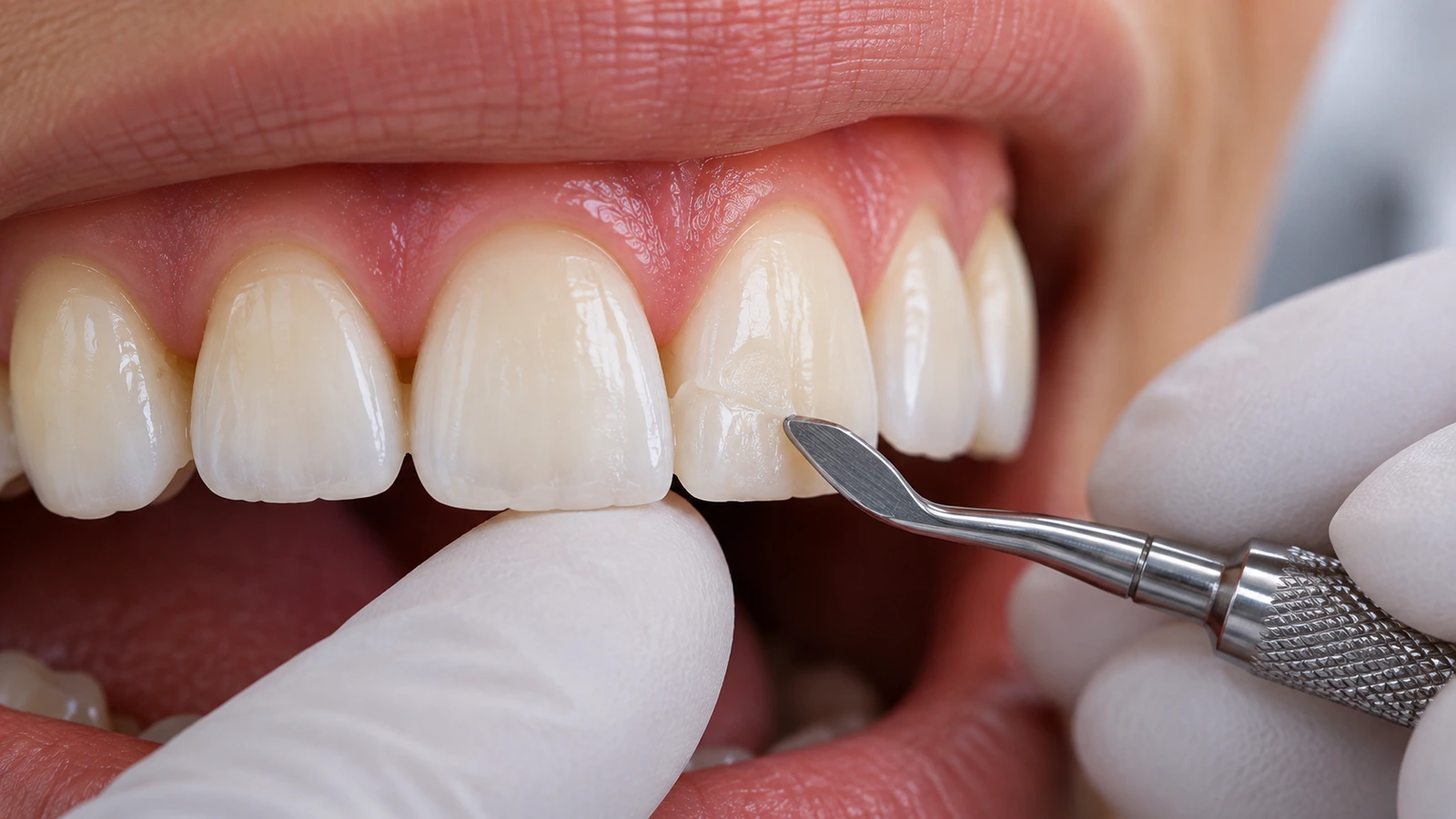
What Is Composite Bonding?
Composite bonding is a tooth-coloured resin applied directly to a tooth, shaped by hand, and hardened with a blue light. It is used to rebuild a chipped corner, close a small gap, lengthen an edge that has worn down, or improve the shape of a tooth that was never quite right. All of it happens in one appointment, in the mouth, with no laboratory involved.
What makes it worth asking about first is how little it takes away. In most cases no anaesthetic is needed and nothing is drilled — the surface is roughened microscopically so the material grips, and the tooth underneath stays whole. Bonding can be polished off again and the tooth is as it was. Almost nothing else in cosmetic dentistry can say that.
What you give up is finish and longevity. Composite is softer than ceramic, it picks up stain at the margins over a few years, and it needs polishing and occasional refreshing. That is a fair exchange for keeping the tooth intact, and it is the reason a good deal of what gets done in veneers could have been done in bonding first.
Repairing, or Reshaping
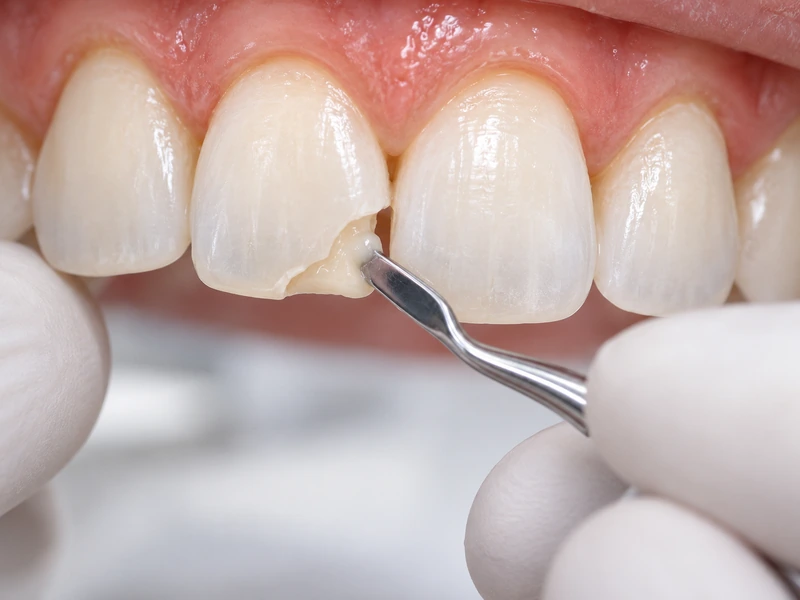
Repairing What Was Lost
A chipped corner, a worn edge, a notch at the gum line. The missing part is rebuilt in a material that matches the tooth, and the shape goes back to roughly what it was before. One appointment, no laboratory, and beyond roughening the surface so the composite grips, nothing is taken off the tooth.
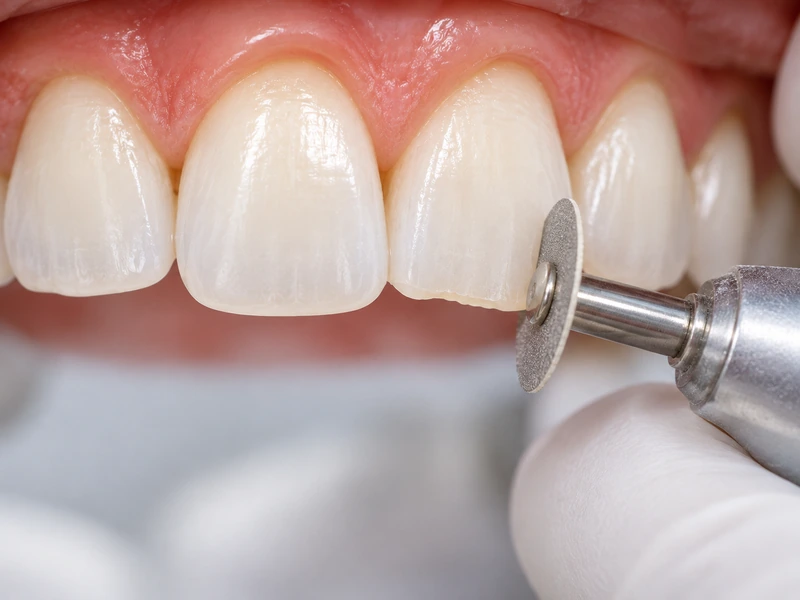
Reshaping What Was Always There
Nothing is wrong with the tooth — it is simply the wrong shape. A gap closed, a short tooth lengthened, a pointed one rounded, an uneven edge brought into line with its neighbour. The work is entirely about proportion, which is why it is judged by eye rather than by X-ray, and why the shape is agreed with you before anything is added.
What Bonding Is Usually Used For
Bonding is the smallest thing cosmetic dentistry can do to a front tooth, and these are the jobs it does best.
- A chipped front cornerThe single commonest reason — a fall, a fork, a bottle, a cricket ball — and usually fixed in one visit.
- A gap between the front teethA small midline space closed by widening the two teeth either side, rather than by moving them.
- Edges worn shortFront teeth flattened by grinding or acid wear, built back to a normal length and shape.
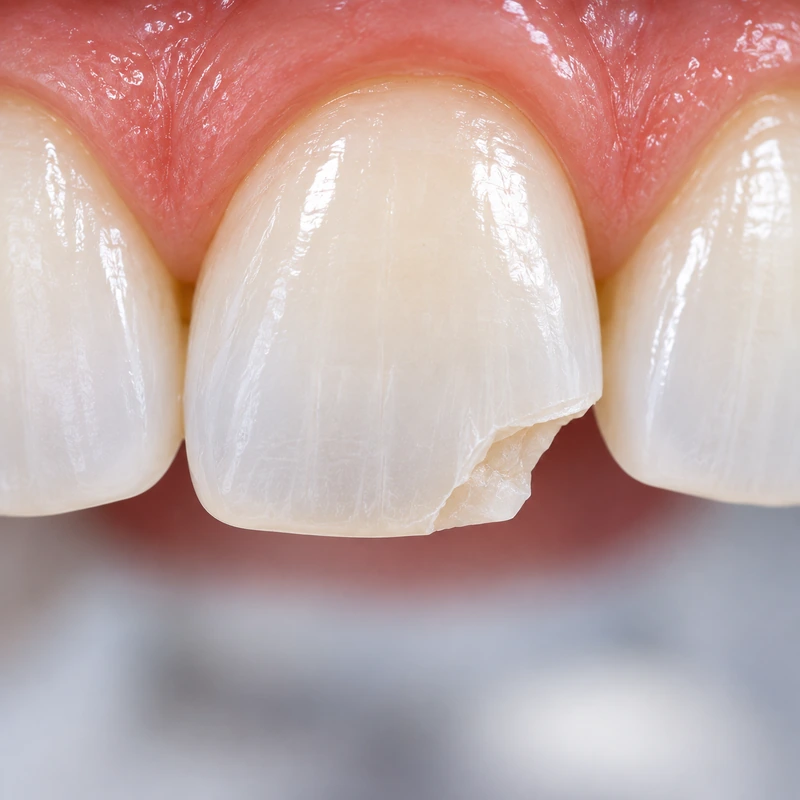
- A notch worn at the gum lineA groove worn where the tooth meets the gum, often sensitive to cold, filled and smoothed in one short visit.
- Old front fillings that no longer matchWork done years ago that has darkened at the edges, replaced and re-shaded to the teeth around it.
- Wanting a change that can be undoneThe reason bonding is worth asking about first: almost nothing is removed, and it can be polished off again.
Options
The Four Jobs Bonding Does
The material is the same each time. What changes is how much is added and where, and the four below cover nearly everything asked for.
 1
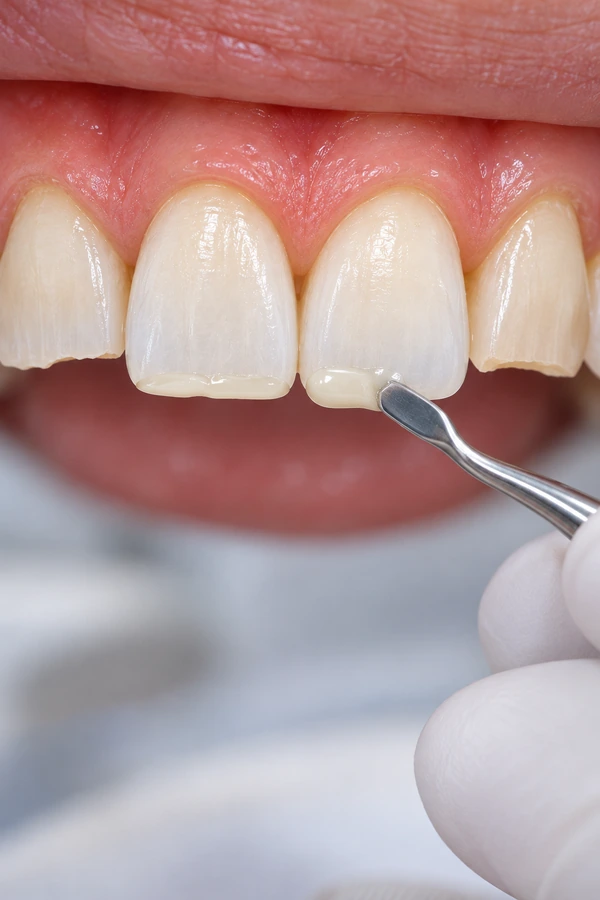
Edge bonding
Rebuilding chipped or worn biting edges, and levelling them so the smile line runs evenly across the front teeth. The most common job of the four, and the most vulnerable afterwards — an edge takes the force every time you bite.
 2
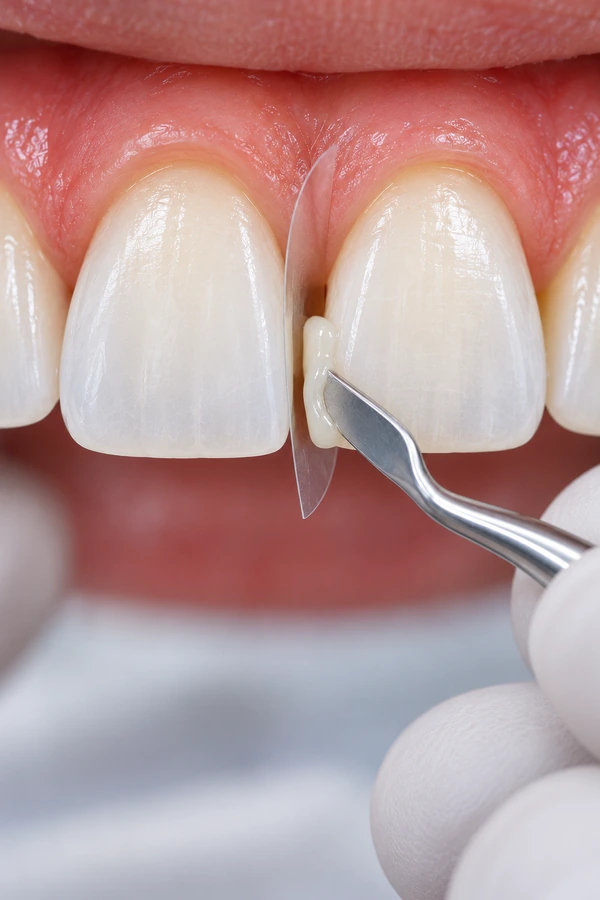
Closing a gap
Composite added to the facing sides of two teeth until the space between them disappears. It works beautifully on a small gap and is done in one visit. On a wide one it means teeth wider than they should be, and moving them is the better answer.
 3
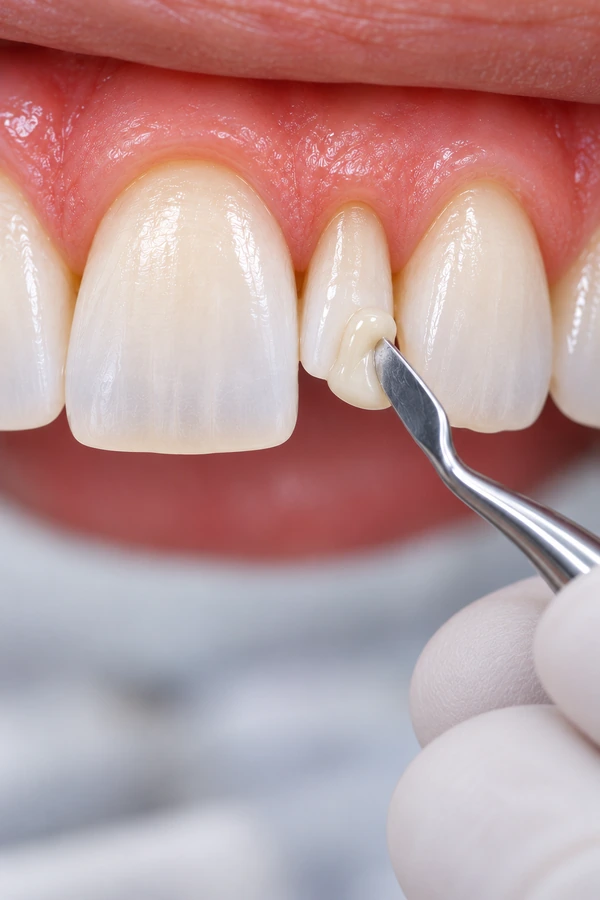
Building up a small tooth
Widening and lengthening an undersized or peg-shaped tooth so it matches its partner on the other side. Symmetry between the two sides matters more to how a smile reads than almost anything else, which is what makes this job worth doing well.
 4
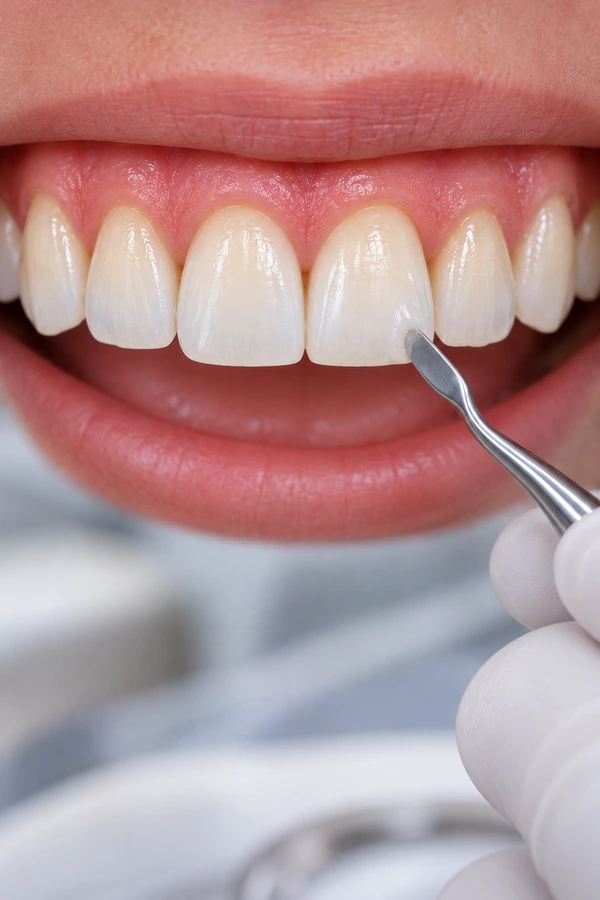
Composite veneers
The whole front surface of several teeth covered in composite, built by hand in the mouth in a single long appointment. It changes shade and shape together without a laboratory and without preparing the teeth — and it asks for more upkeep than ceramic does.
How Is Composite Bonding Done?
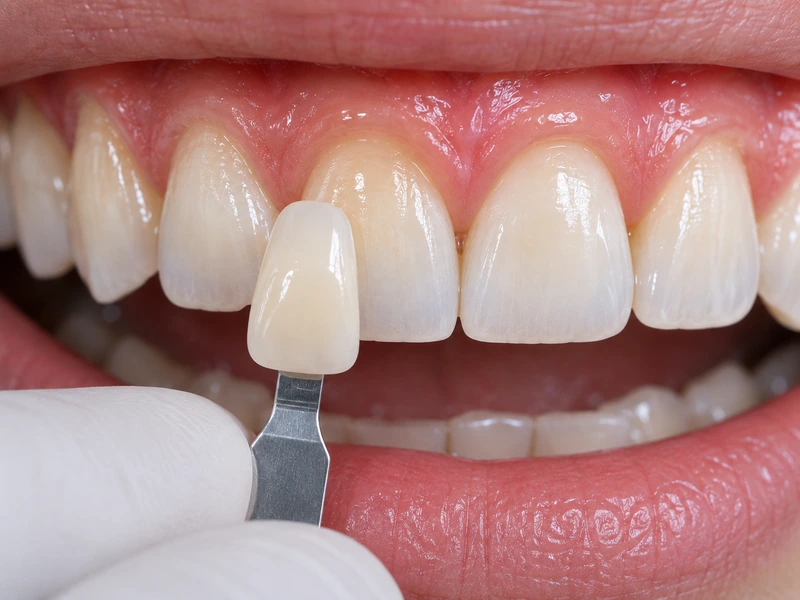
Matched before anything is added
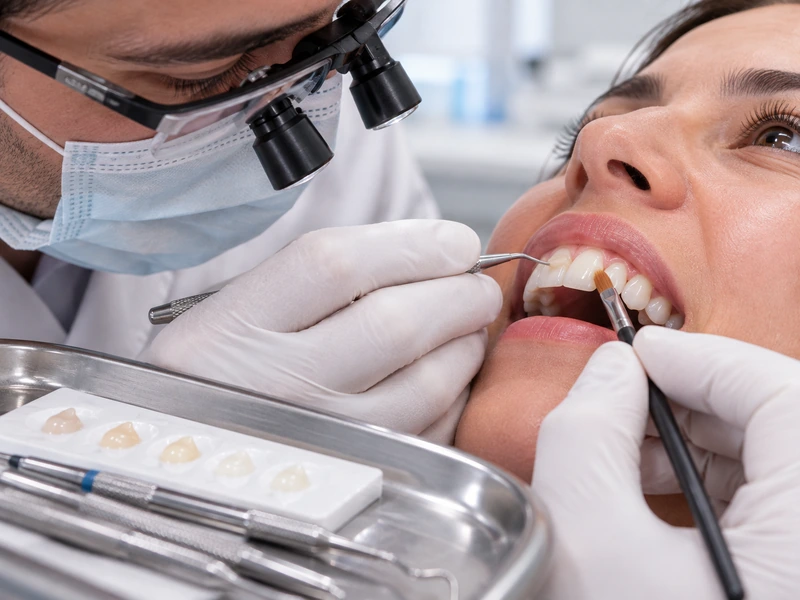
The shade is chosen early, in daylight, with the tooth still wet — teeth dehydrate and lighten within minutes of being isolated, so a shade matched late in the appointment looks too pale for a week afterwards and then looks wrong forever. The shape is agreed before anything is added, sometimes drawn on a photograph or tried first in unset material. Most bonding needs no injection, because the tooth is not being drilled; where an old filling is being replaced or a chip runs deep, local anaesthetic is used.
Layered by hand, and set with light
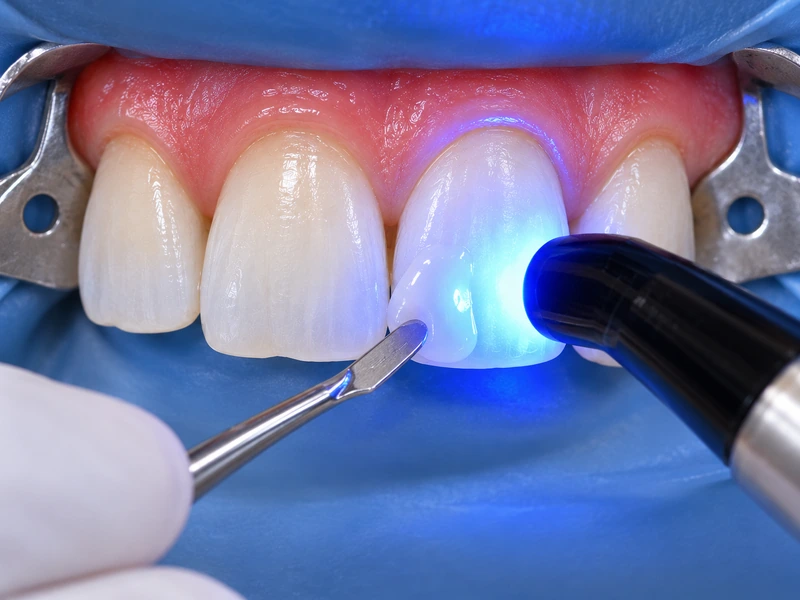
The surface is cleaned and conditioned so the composite grips, and the tooth is usually isolated to keep it dry — the bond fails if it is not. The material is then placed in layers and each one is hardened with a blue light. More than one shade is used, because a front tooth is not one colour: it is more opaque near the gum and almost translucent at the tip, and reproducing that is what separates bonding that disappears from bonding you can spot across a table.
Where the result is actually decided
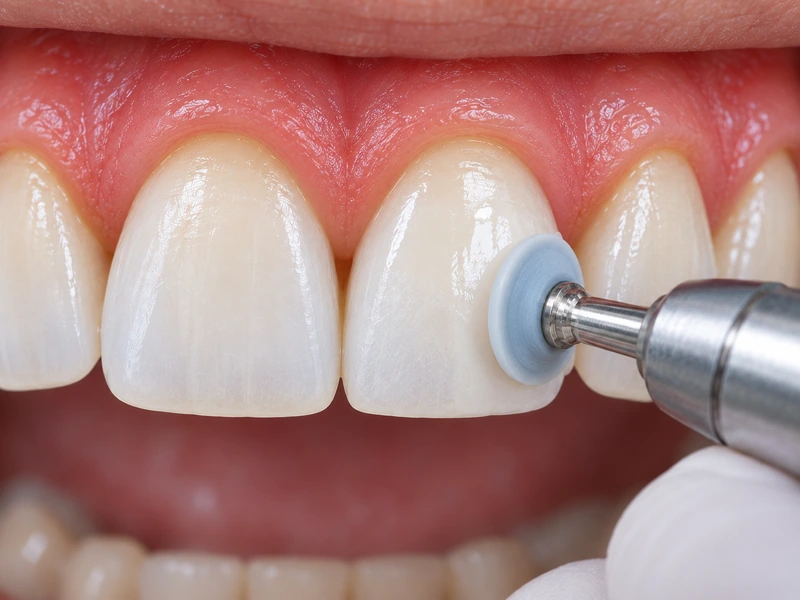
The shape is refined with fine discs and strips, and the bite is checked so the new edge is not the first thing to hit when you close — an edge that takes the whole force will break off, and that is the commonest reason bonding does not last. Then it is polished, in stages, for longer than most people expect. Polish is what makes composite look wet rather than chalky, and it is also what keeps stain out, because a rough surface holds colour. Bonding that looks right on the day and dulls within months was usually polished in a hurry.
Recovery
Looking After Bonding
Composite is repairable and forgiving, which is its whole appeal. It is also softer than enamel, and the four points below follow from that.
- 1
It stains where a tooth would not
Tea, coffee, red wine and tobacco pick out the margins over a few years. Bonding cannot be whitened once it has stained — it is polished, and eventually refreshed.
- 2
Front teeth are not tools
Bottle tops, packaging, nails, pens and cracking seeds. A bonded edge is weaker than the enamel it replaced, and all of those take it off.
- 3
A guard if you grind
Grinding is the commonest reason edge bonding breaks within the year. If the edges were worn down in the first place, something wore them, and it has not stopped.
- 4
It is polished, not replaced
Expect a polish at check-ups and a refresh every few years. That is maintenance rather than failure, and it is the exchange you made for keeping the tooth intact.
Same material, different job
Bonding vs a White Filling
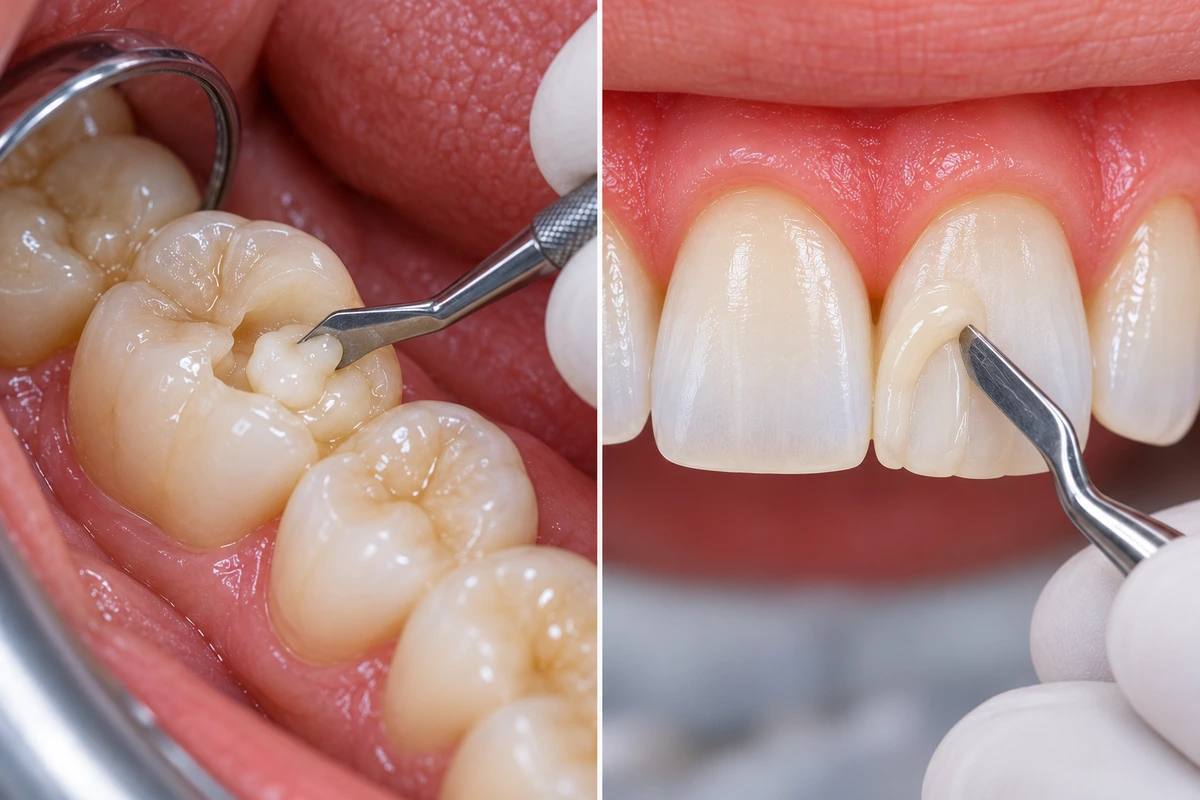
They are made of the same composite, which is why the question comes up so often. What differs is what the appointment is for.
A white filling is a repair. Decay is drilled out, the cavity is packed and sealed, the shape is restored so the tooth works and cleans properly, and the shade is matched closely enough that nobody looks twice. It is treatment for disease, and it is judged on whether the tooth is sound, sealed and comfortable.
Bonding is a cosmetic build. Usually nothing is wrong with the tooth: no decay is removed and very often nothing is drilled at all. The composite is layered in two or three shades to reproduce the way a real front tooth runs from opaque at the gum to translucent at the tip, then shaped and polished across a much longer appointment. It is judged on whether anyone can tell.
This matters most when a front tooth is involved. Asking for it to be 'just filled' books the shorter appointment, and the result will be sound but visible. If how it looks is the point, say so when you book — what changes is the time set aside, not only the work.
What Happens at Your First Bonding Consultation
- 1ExaminationThe tooth, the gum around it and the bite — and whether wear or decay is the real cause.
- 2Shade and shapeMatched in daylight with the tooth wet, and the shape agreed before anything is added.
- 3What it will not doBonding cannot move a tooth, lighten one, or survive sitting in the way of your bite.
- 4PlanHow many teeth, how long the appointment needs, and whether anything is needed first.
- 5AftercareStaining, chipping, a guard if you grind, and when it will want a polish.
Why us
Why Choose Us for Composite Bonding
- Cosmetic work led by Dr. S Narasimha Sai Teja, a cosmetic dental surgeon with more than 10 years of experience.
- An honest opinion on whether bonding will give the result you want, or whether another option is better.
- Instruments sterilised for every patient, under a strict standard.
- Open every day, 9:30 AM to 9:30 PM, on Usha Mullapudi Road, Gajularamaram.
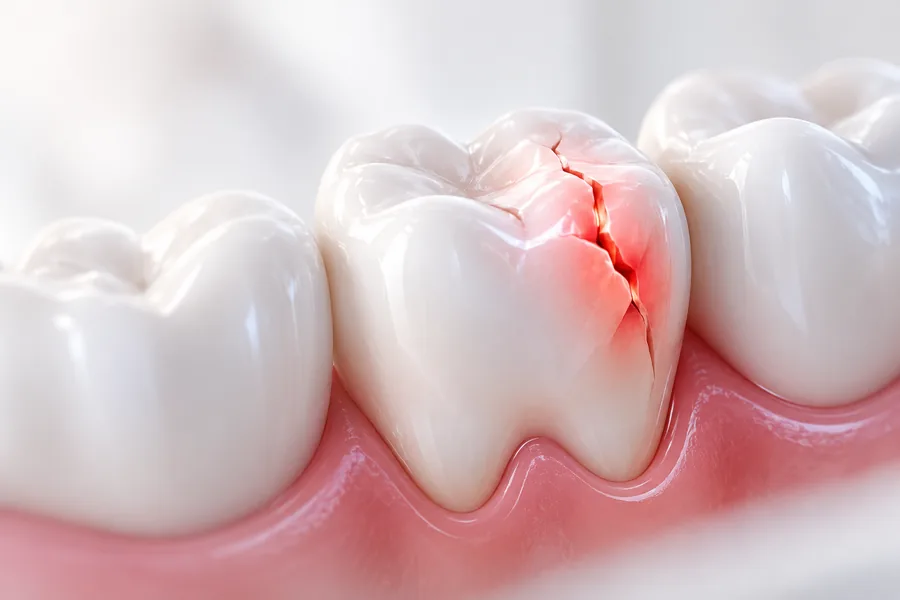
Tooth Pain & Repair
Relief from toothache and repair for decayed, cracked or broken teeth, from fillings and root canals to crowns.
- Root Canal Treatment
- Tooth Sensitivity Treatment
- Cavity Treatment
- Tooth Fillings
- Dental Crowns & Caps
- Wisdom Tooth Removal
- Emergency Dental Care
 learn more
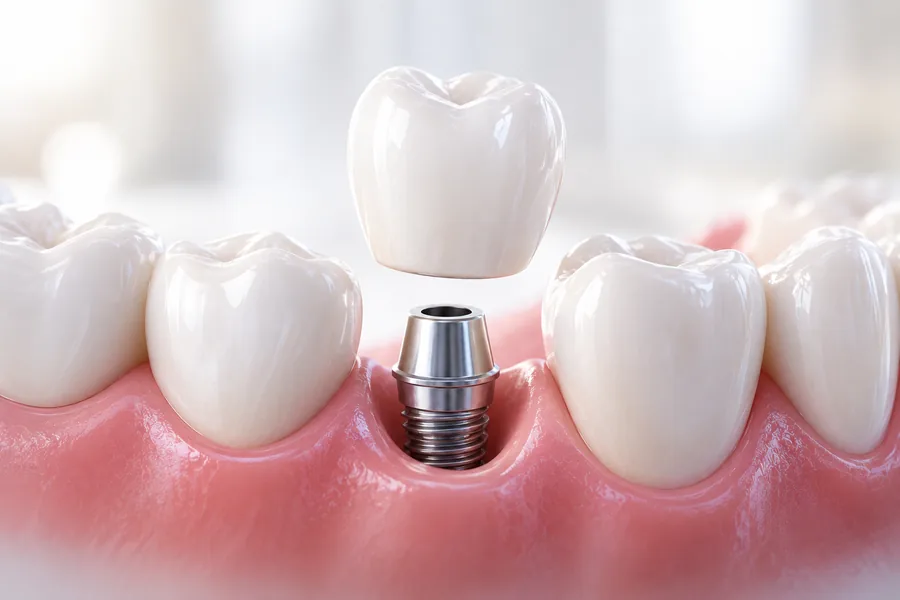
Missing Teeth
Implants, bridges and dentures to replace missing teeth, planned by our implantologist with each option explained honestly.
 learn more
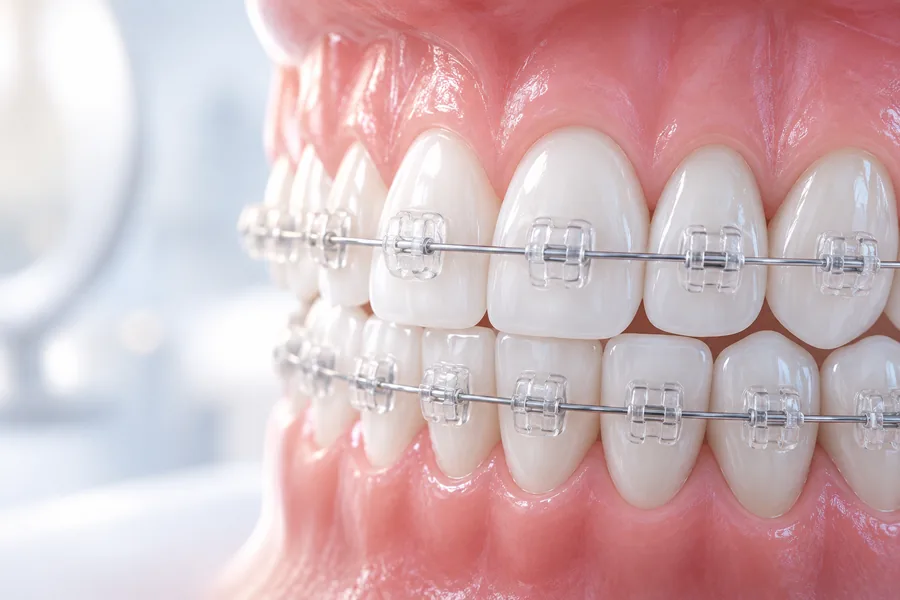
Straightening
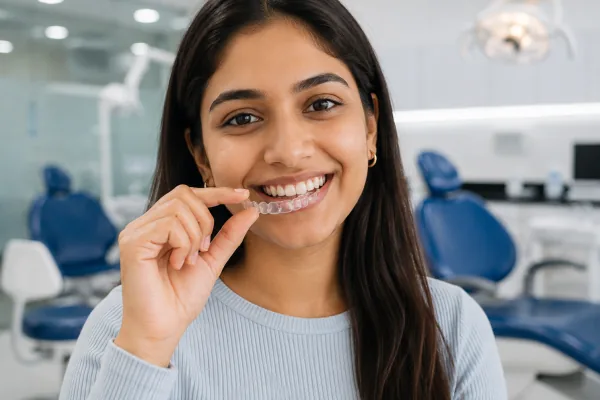
Braces and clear aligners for crooked or gapped teeth, for children and adults.
 learn more
Cosmetic
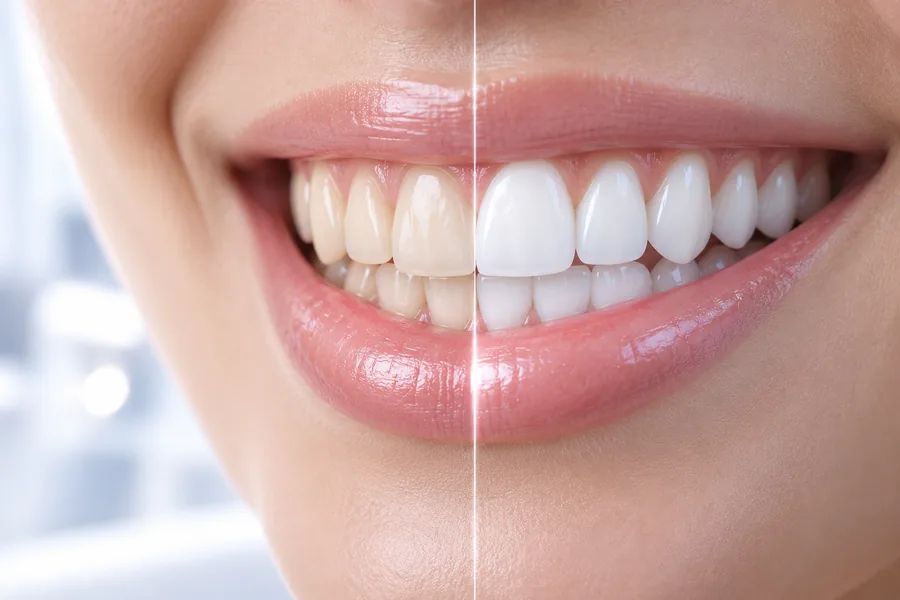
Whitening, veneers, bonding and smile makeovers to improve the colour and shape of your smile, led by our cosmetic dentist.
 learn more
Gums & Cleaning
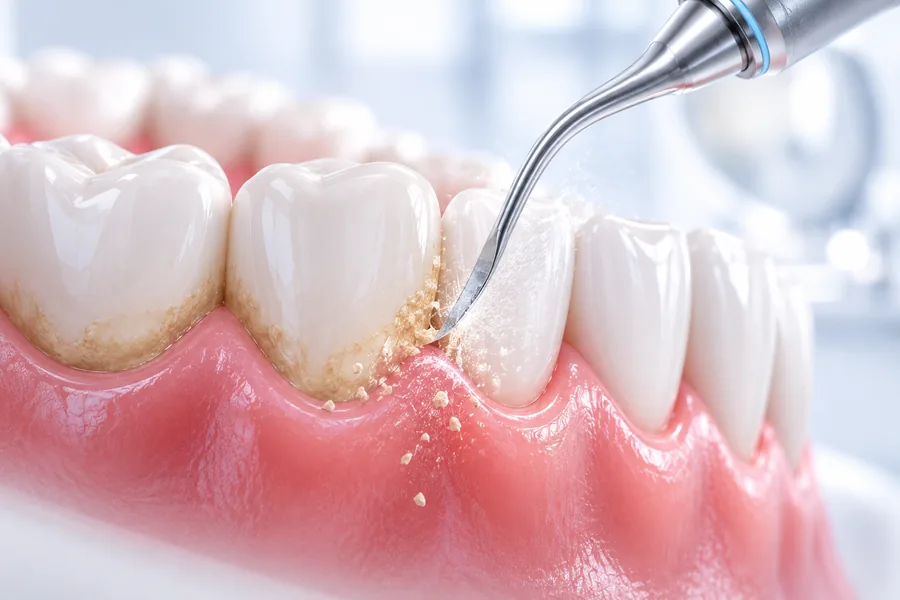
Cleaning, gum treatment and laser gum care for bleeding gums and bad breath, with our periodontist.
 learn more
Kids & Family
Gentle check-ups, fluoride and sealants for children with our pedodontist, and routine check-ups for the whole family.






Verified Google Reviews
Sathish
2026 · Google
Excellent Experience at Kleem Dental Universe, Gajularamaram! I had a wonderful experience at Kleem Dental Universe, Gajularamaram. Dr. Sai Teja explained the entire treatment process very clearly and patiently. I really liked his way of talking and how comfortably he explained everything before starting the treatment. He performed the treatment perfectly and made sure I was comfortable throughout the procedure. The clinic atmosphere was clean, pleasant, and welcoming. I also appreciated the professional approach and the care taken during the treatment. Dr. Sai Teja is truly excellent at both explaining the treatment and performing it with care and precision. I am very happy with my experience and would definitely recommend Kleem Dental Universe to anyone looking for quality dental care. Thank you, Dr. Sai Teja, for the excellent treatment and friendly approach! 😊
venkatasateesh naidu
2026 · Google
Here is my genuine review. I went here For teeth cleaning . Doctor is very patient ,smiling, very approachable. I felt like i am talking to a friend . He was gentle on my teeth and he is giving utmost importance to my comfort. I felt free to take breaks in between. Coming to clinic atmosphere. Very calm and peaceful. Here onwards this is my go to dental clinic for my family needs
Methri Naveen
2026 · Google
Your receiving is very good and your response is very good. The doctor explained very well. Please visit again and again. Kleem Dental Universe Gajularamaram.
Near you
Composite Bonding Near You in Gajularamaram
If you have been searching for composite bonding near you, it is worth knowing that this is the treatment most often skipped over in favour of something larger. A chip, a small gap or a short edge can very often be handled in one appointment without a tooth being prepared for anything — and if you later want ceramic, nothing about having tried bonding first stands in the way.
Bring the photograph that made you notice it. Bonding is judged by eye, so the useful conversation is about what you want the tooth to look like, not about what material it is made of.
99494 16661Gajularamaram
Contact
Reach out to schedule your next dental visit
Whether you have a question, need expert advice, or are ready to book your next appointment, our team is here to help.
Reach out to us on
- Phone Number 99494 16661
- Location 1st Floor, Usha Mullapudi Rd, Above Muthoot Finance, Opp. Lakshmi Jewellers, Gajularamaram, Hyderabad, Telangana, 500117
Working Hours
- Mon – Sun:
- 9:30 AM – 9:30 PM
FAQs
Frequently asked questions about composite bonding
Still have a dental question?
Send us a message and our dental team will help.
Does composite bonding damage your teeth?
In most cases nothing is removed at all. The surface is roughened microscopically so the material grips, which is not the same as drilling, and the tooth underneath is left whole. That is what makes bonding reversible in a way veneers and crowns are not, and it is the reason it is worth asking about before anything larger.
How long does bonding last?
Around four to eight years before it wants refreshing, and less on a biting edge than on a flat front surface. Grinding shortens it most, followed by using front teeth on packaging and bottle tops. When it does go, it is usually a chip at the edge rather than the whole thing coming away, and it is repaired rather than started again.
Can bonding be removed?
Yes — it is polished off and the tooth is left as it was, which is the clearest difference between bonding and everything else in cosmetic dentistry. That is why it suits a first attempt: try the shape, live with it, and decide later whether you want something more permanent.
Does bonding stain?
It does, at the margins, over a few years, and unlike enamel it cannot be whitened. It can be polished, which removes most surface staining, and refreshed when polishing is no longer enough. If you are planning to whiten your teeth, whiten first and have the bonding matched to the finished shade afterwards — in that order, never the other way round.
Can bonding close a gap between my front teeth?
A small one, very well, in a single visit and without moving anything. The limit is proportion: closing a wide space means making both teeth wider than they ought to be, and past a certain point that looks worse than the gap did. Where the space is large, moving the teeth and then bonding very little is the better sequence.
Does it hurt?
Usually there is nothing to feel, because the tooth is not being drilled and most bonding is done without an injection. Anaesthetic is used where an old filling is being replaced, where a chip runs deep enough to be sensitive, or where work is needed close to the gum. Say if you would rather have it — there is no reason to sit through anything uncomfortable.